A Good Mother and a Productive Person Despite RSD
Home Success Stories A Good Mother and a Productive Person Despite RSD
A Good Mother and a Productive Person Despite RSD
Share this page:
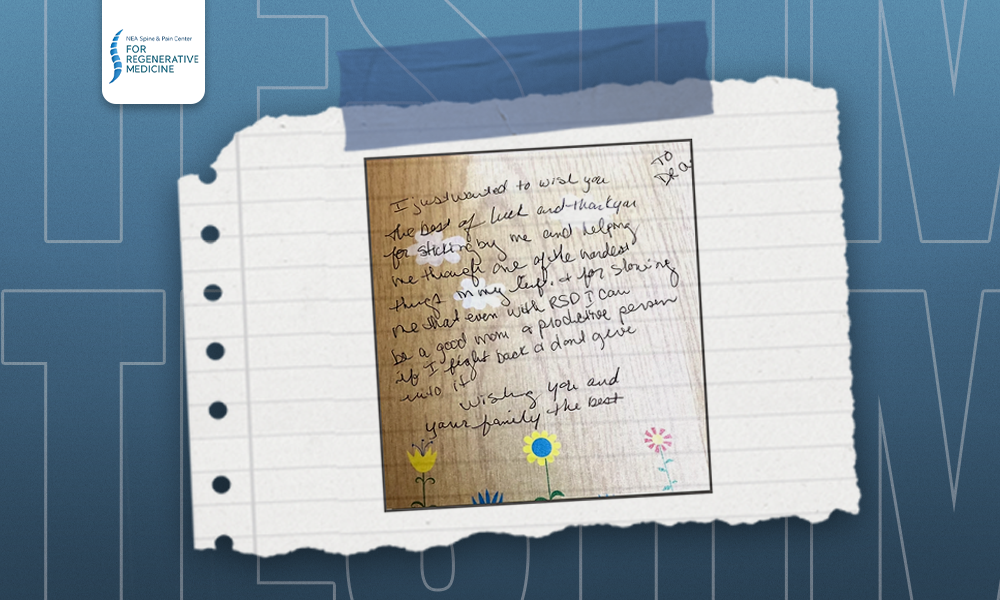
For years, this patient struggled through one of the most difficult challenges of her life while living with RSD (Reflex Sympathetic Dystrophy). It affected not only her body but also her confidence, her role as a mother, and her ability to live a productive life.
Through the compassionate care and continuous support of Dr. Abraham, she discovered that her condition should not restrict her activities. He helped her believe that even with RSD, she can still be a good mother, a strong person, and someone who contributes meaningfully to life—as long as she do not give up and keep fighting.
She is truly grateful for Dr. Abraham’s guidance and dedication. His expertise did not just help her manage the pain, it helped her rediscover hope, purpose, and confidence in herself once again.
The sympathetic nervous system:
Sympathetic nerve controls involuntary motions and bodily functions and are part of the autonomic nervous system. Generally, the sympathetic nervous system triggers reactions, such as an accelerated heartbeat when you're afraid.
The parasympathetic nervous system, the other component of the autonomic nervous system, counteracts these responses by causing your heart to slow down when the fear has subsided.
Rarely, trauma (an injury or surgery) can trigger an abnormal sympathetic nervous system reaction that results in RSDS.
Reflex sympathetic dystrophy (RSD):
Reflex sympathetic dystrophy (RSD) is a kind of complex regional pain syndrome (CRPS) in which a patient experiences persistent pain in a limb or extremity after a serious trauma, heart attack, stroke, or difficult surgery, but no nerve is directly injured. In addition to pain, other symptoms include sensitivity, restricted movement, changes in the limb's appearance (color, texture, hair, and nails), temperature variations from different body parts, edema, cramping in the muscles, shaking, burning, and stiffness. Although the actual etiology of this condition is still unknown, researchers believe it is related to the patient's neurological system and the body's reaction to harm.
The symptoms of RSDS usually go away with time for most people, but occasionally they might spread to other parts of the body, such as a complete limb. Rarely, the motor symptoms, skin alterations, and pain might last for years and become unbearable.
Various medications (such as anti-inflammatory, pain-relieving, anti-seizure, antidepressant, steroids, and osteoporosis medications), topical creams, injections, physical therapies, electrical nerve and spine stimulation, and intraspinal pain management therapy are all part of a treatment plan for reflex sympathetic dystrophy.
Advanced treatments offered by Dr. Abraham for chronic pain of RSD:
Thanks to his advanced expertise, Dr. Abraham provides innovative, minimally invasive procedures designed to relieve pain at its source and restore quality of life, especially for conditions like RSD that don’t always respond to traditional treatments.
If you're living with chronic pain or RSD, you don’t have to face it alone. Advanced pain therapies — when performed with precision and care — can give you your life back. Schedule an evaluation with Dr. Abraham and take the first step toward real healing.