Peripheral Nerve Stimulation (PNS) Implantation
Home Procedures Offered Advanced Procedures Peripheral Nerve Stimulation (PNS) Implantation
Peripheral Nerve Stimulation (PNS) Implantation
PNS is a minimally invasive technique that alleviates chronic pain by focusing on specific nerves located outside the spinal cord. It is particularly effective for pain in localized areas, such as arms or legs.
Share this page:
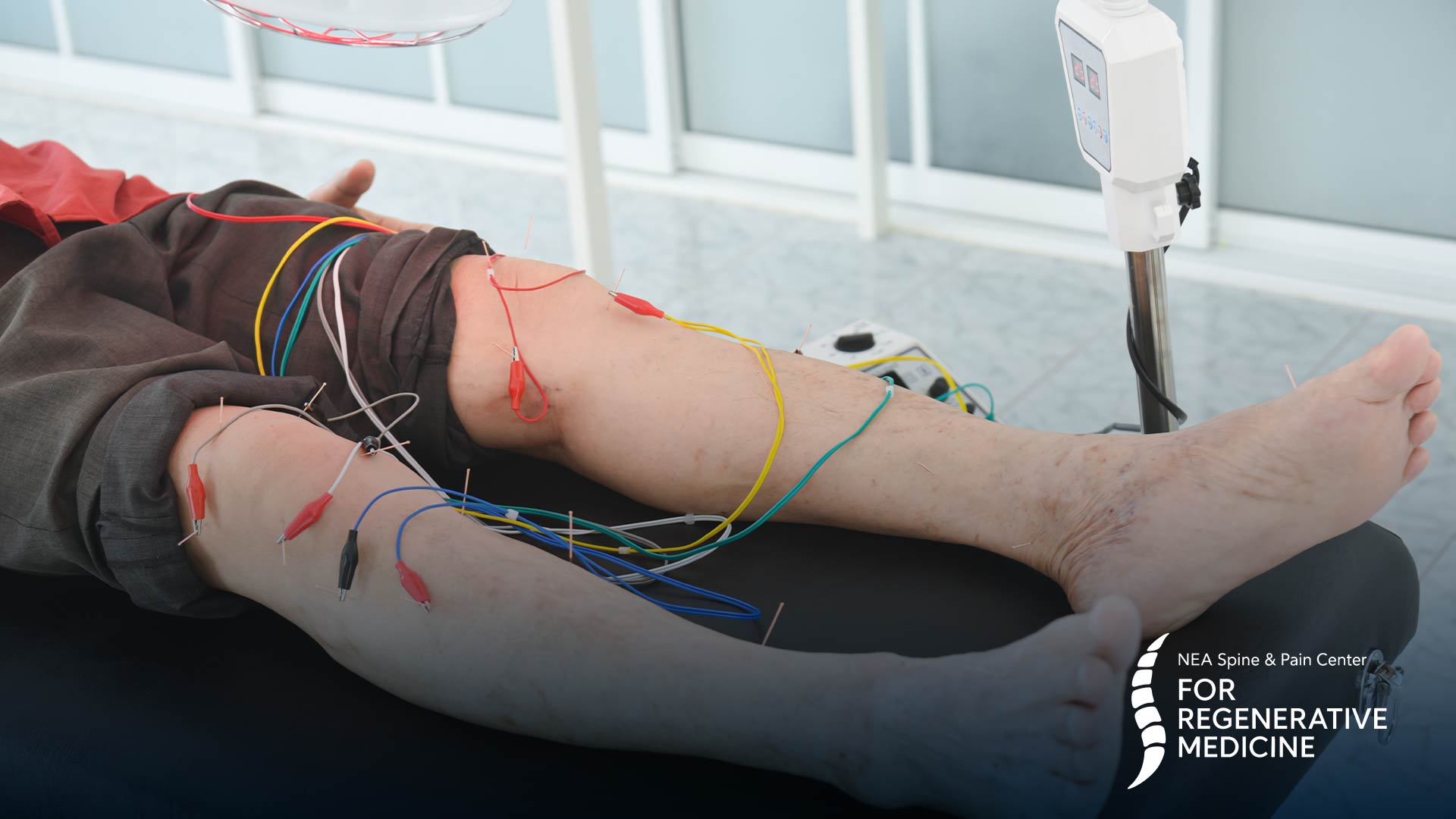
Peripheral nerve stimulation (PNS) is a minimally invasive therapy approved for individuals experiencing specific forms of chronic nerve pain. PNS system implantation is a safe, same-day procedure that can provide substantial relief to patients for whom other treatments, such as medication and other pain procedures, have been ineffective.
Peripheral nerves are the nerves that attach to our organs and extremities and extend beyond the brain and spinal cord. A PNS system can be implanted to precisely target the peripheral nerves that are causing pain under the guidance of ultrasound or X-ray, such as sciatic nerve, occipital nerve, femoral nerve, etc.
Chronic pain PNS is an outpatient procedure. Dr. Abraham, board-certified anesthesiologist and pain management specialist, implants a small electrical device near the peripheral nerves that are causing pain. This electrode is connected to a pulse generator, which transmits gentle electrical impulses to the nerve. These impulses disrupt the nerve's ability to transmit pain signals to the brain, thereby delivering relief. The generator is tiny enough to be inserted directly beneath the skin and can offer immediate relief from chronic pain symptoms.
Nerve stimulation surgery can alleviate pain symptoms associated with diabetic neuropathy (PNS for diabetic neuropathy), amputation, trauma, complex regional pain disorder, trigeminal neuralgia, hernia surgery, occipital neuralgia (Occipital nerve stimulation-ONS), and headache disorders, in addition to spinal pain.
Peripheral nerves are the nerves that attach to our organs and extremities and extend beyond the brain and spinal cord. A PNS system can be implanted to precisely target the peripheral nerves that are causing pain under the guidance of ultrasound or X-ray, such as sciatic nerve, occipital nerve, femoral nerve, etc.
What is peripheral nerve stimulation therapy?
Nerves transmit signals that induce pain. When a nerve is damaged, it will emit pain signals continually. Regrettably, there is no immediate solution to this issue; however, the body is unaware of this. The purpose of pain is to notify us when our body is in distress, allowing us to address the situation. If it is not possible to immediately repair a damaged nerve, the sole remaining alternative is to prevent the nerve from transmitting signals through nerve implant technology.Chronic pain PNS is an outpatient procedure. Dr. Abraham, board-certified anesthesiologist and pain management specialist, implants a small electrical device near the peripheral nerves that are causing pain. This electrode is connected to a pulse generator, which transmits gentle electrical impulses to the nerve. These impulses disrupt the nerve's ability to transmit pain signals to the brain, thereby delivering relief. The generator is tiny enough to be inserted directly beneath the skin and can offer immediate relief from chronic pain symptoms.
Nerve stimulation surgery can alleviate pain symptoms associated with diabetic neuropathy (PNS for diabetic neuropathy), amputation, trauma, complex regional pain disorder, trigeminal neuralgia, hernia surgery, occipital neuralgia (Occipital nerve stimulation-ONS), and headache disorders, in addition to spinal pain.
Nerve stimulation for pain management:
This procedure is advantageous for the following conditions:• Persistent localized nerve pain: pain that can be attributed to a specific cause, such as surgery, injury, or a pre-existing nerve condition.
• Pain following surgery: persistent discomfort following surgery.
• Complex Regional Pain Syndrome (CRPS): pain and sensitivity in a particular limb, frequently as a result of an injury.
• Occipital neuralgia: neuropathic pain originating from the occipital nerves near the base of the skull.
• Pain in Specific Regions: for example, the face, limbs, legs, or feet.
• Peripheral Nerve Injuries: pain that is the result of peripheral nerve irritation or injury.
PNS offers a minimally invasive and reversible alternative to other treatments that have not been effective in treating these conditions, providing targeted relief. Accurate and well-informed information regarding your treatment options is essential when you are dealing with chronic pain. Dr. Abraham will discuss your case with you to identify whether peripheral nerve stimulation is the optimal course of action for you.
PNS offers a minimally invasive and reversible alternative to other treatments that have not been effective in treating these conditions, providing targeted relief. Accurate and well-informed information regarding your treatment options is essential when you are dealing with chronic pain. Dr. Abraham will discuss your case with you to identify whether peripheral nerve stimulation is the optimal course of action for you.
Who is a suitable candidate for peripheral nerve stimulation?
Dr. Abraham follows PNS clinical guidelines and recommends peripheral nerve stimulation as an option if:• Your pain is caused by peripheral neuropathy.
• Conservative treatment options (medications, physical therapy, injections, or nerve blockers, etc.) have been unsuccessful.
• You are not a candidate for or prefer not to undergo additional surgery.
• Your pain is not the result of an easily correctable issue.
• You do not have any significant medical or psychological conditions that would make the PNS implantation procedure unsafe.
What to expect for the PNS implant procedure steps?
During the initial consultation, Dr. Abraham explains the trial process, recovery timeline, and an estimated nerve stimulator cost based on your specific needs. Here are the main nerve implantation stages:• Trial procedure: Initially, you will be subjected to a trial period in order to evaluate your PNS. Dr. Abraham will employ ultrasound or X-ray imaging to position a temporary electrode in close proximity to the damaged nerve. An external stimulator, which comprises an antenna and transmitter, is connected to the temporary electrodes to deliver electrical impulses. Subsequently, he will evaluate the device to confirm that it is stimulating the appropriate region. You will need to remain awake, but you will be under a local anesthetic to ensure your comfort.
• Trial period: You will be able to regulate the intensity of the stimulation by activating and deactivating the device and modifying the settings as necessary. Upon activating the device, a slight tingling sensation will replace your pain, then fade to nothing. Monitor your daily activities and pain relief during the one-week trial. The temporary electrodes are removed following the trial, and you will consult Dr. Abraham to determine whether a permanent implant is appropriate.
• Nerve stimulator implant procedure: Dr. Abraham, board-certified anesthesiologist and pain management specialist, will implant a permanent device if the procedure is successful. Your progress will be monitored, and settings will be adjusted as necessary during follow-up appointments. The device is reversible and can be deactivated or removed as necessary.
PNS therapy benefits provide you with a higher quality of life, improved mobility, elevated nerve implant success rates, and relief from chronic pain. Chronic pain has been clinically demonstrated to be alleviated by a peripheral nerve stimulation procedure. Although your pain may not be wholly alleviated, certain patients have reported experiencing complete pain relief.
If chronic nerve pain is limiting your life, you don’t have to keep living in discomfort. Dr. Abraham, board-certified anesthesiologist and pain management specialist at New England Advanced Spine and Pain Center for regenerative medicine, offers advanced treatments like Peripheral Nerve Stimulation (PNS) to help you regain comfort and mobility. Schedule a consultation today to discuss whether PNS therapy is right for you and start your journey toward long-lasting pain relief.
Peripheral nerve implant recovery:
Dr. Abraham will provide detailed instructions regarding PNS post op care, the device you should be aware of, and the time at which you may resume your usual daily activities.PNS therapy benefits provide you with a higher quality of life, improved mobility, elevated nerve implant success rates, and relief from chronic pain. Chronic pain has been clinically demonstrated to be alleviated by a peripheral nerve stimulation procedure. Although your pain may not be wholly alleviated, certain patients have reported experiencing complete pain relief.
PNS complications:
Peripheral nerve stimulation is a safe outpatient procedure. Some nerve stimulator side effects, such as bleeding and infection of the incision, post-surgical pain, dizziness, device damage, and signal intensity issues, may be present, as with any surgical procedure. If you encounter issues with PNS device adjustment, such as an inability to regulate stimulation or a decrease in signal intensity, consult Dr. Abraham.If chronic nerve pain is limiting your life, you don’t have to keep living in discomfort. Dr. Abraham, board-certified anesthesiologist and pain management specialist at New England Advanced Spine and Pain Center for regenerative medicine, offers advanced treatments like Peripheral Nerve Stimulation (PNS) to help you regain comfort and mobility. Schedule a consultation today to discuss whether PNS therapy is right for you and start your journey toward long-lasting pain relief.