Nerve Blocks & RFA
Back pain can originate from joints, discs, or nerves. A nerve block is often the first step, helping localize the problem and provide temporary relief. If successful, RFA can follow for longer pain control.
Share this page:
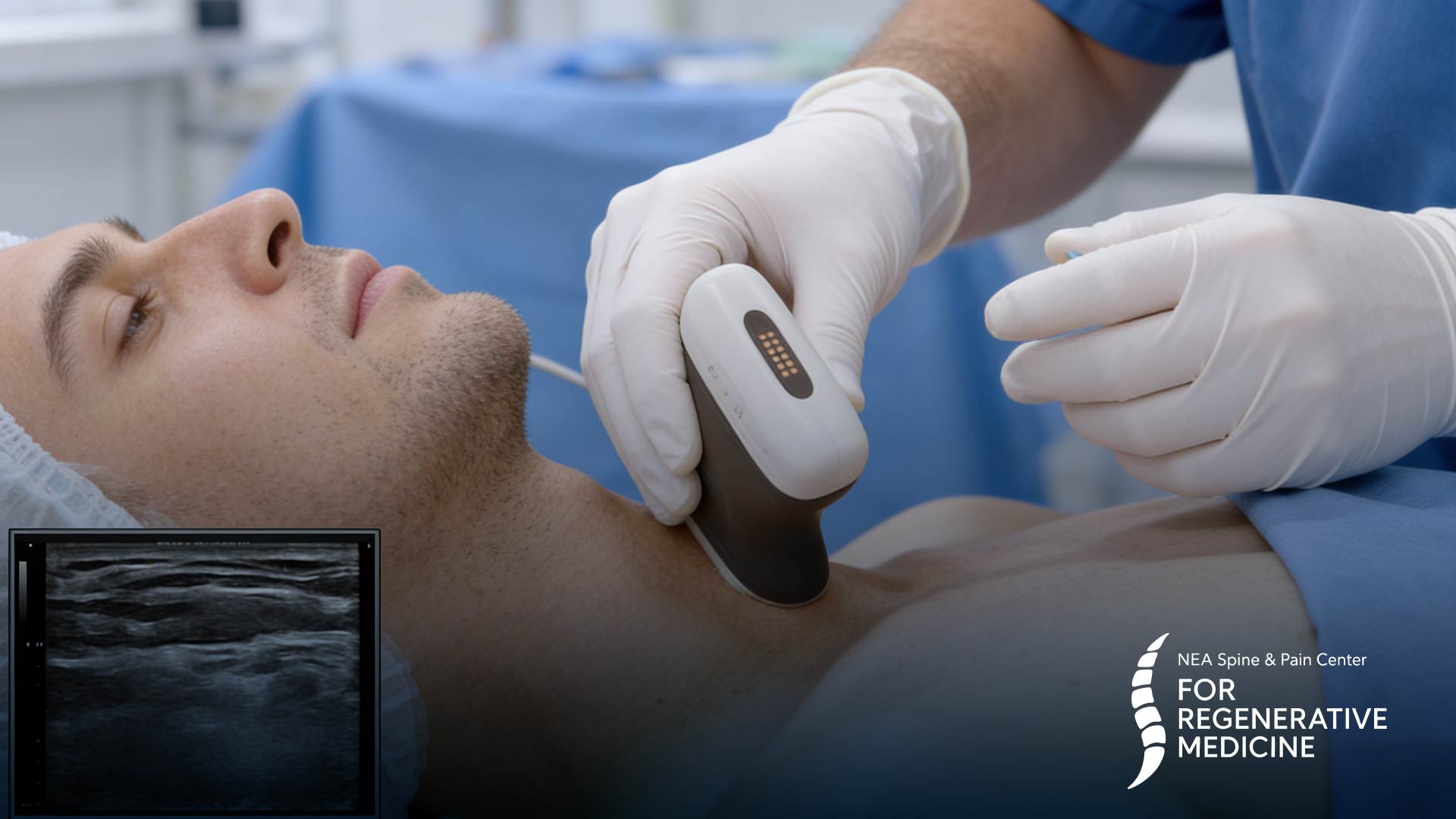
Back pain is a prevalent health issue among both working-age adults and the elderly. It may be due to muscle inflammation, spinal joint inflammation, herniated discs that press on nerves, or disc inflammation. Patients either neglect to consult with a physician or believe that their symptoms are just generalized back pain. Additionally, they may not be prepared for surgery even after identifying the underlying cause. Fortunately, there are currently treatment options available to alleviate pain without the need for surgery, including Radiofrequency Ablation (RFA) and Nerve Block.
• A nerve block procedure does not necessitate sedation. During the nerve block, patients must be able to report any changes in their pain symptoms.
• Furthermore, nerve blocks are well-tolerated by adults of all ages. Some may experience mild nerve block side effects, such as temporary soreness, but most recover quickly, with a short nerve block recovery time.
• Many patients are curious about understanding nerve blocks and often wonder if there is any special preparation required. Dr. Abraham explains that preparing for nerve blocks is usually simple and straightforward, with only minimal instructions such as avoiding heavy meals or adjusting certain medications. He also clarifies that the nerve block duration is generally short, offering temporary relief, depending on the case.
Benefits of nerve blocks include:
• Temporarily alleviating or reducing localized pain, particularly that resulting from inflammation in the joints, spinal joints, or herniated discs that press on nerves.
• Addressing chronic back pain, arthritis pain, degenerative disc disease, lower back pain, and neck pain.
• Used as a nerve block for RFA to confirm that the painful nerve is a suitable target; if the pain reduces substantially following a nerve block injection, the targeted nerve is likely the source of the pain. Therefore, it is occasionally employed as a temporary treatment or as a preliminary step to RFA to verify that the pain is originating from a particular nerve.
• Patients with chronic headaches and facial pain with trigger points suspected of migraine, cluster headaches, trigeminal autonomic cephalalgias, trigeminal neuralgia, or cervicogenic headaches may benefit from this treatment if X-rays, MRIs, or CT scans do not provide a firm diagnosis.
• Can be repeated when needed, though the nerve block success rate depends on the type and location.
• Can be used for different nerve types, including medial branch nerves, lateral branch nerves, and peripheral nerves.
• Patients may need aftercare for nerve blocks, such as applying ice and resting briefly, but recovery is usually fast.
RFA for nerve pain is applied for the following purposes:
• Treating chronic pain associated with the spine, joints, or nerves that is unresponsive to other treatments, such as painful facet joints, degenerative discs, or degenerative spine conditions that cause chronic back or neck pain.
• Treating nerve-related pain conditions, such as postherpetic neuralgia or trigeminal neuralgia.
• Although RFA is not capable of directly diagnosing or locating pain points, Dr. Abraham employs nerve blocks to verify the diagnosis. RFA may be considered as a treatment option if nerve blocks are effective.
Dr. Abraham board-certified anesthesiologist and pain management specialist at New England Advanced Spine and Pain Center for regenerative medicine, has experience with a variety of approaches to managing chronic pain and routinely deals with complex cases. If you are interested in additional information regarding diagnostic nerve blocks and radiofrequency ablation for pain alleviation, please do not hesitate to contact us.
Nerve blocks:
• Nerve blocks are administered to numb specific nerves or groups of nerves that are suspected of causing pain. Dr. Abraham, board-certified anesthesiologist and pain management specialist, can determine whether the area is the source of pain by administering a local anesthetic and steroid medication to the nerve and evaluating nerve block effectiveness in alleviating the pain. Dr. Abraham concludes that the patient's pain originates from a different region of the body if the patient reports minimal or no pain alleviation following the anesthetic injection.• A nerve block procedure does not necessitate sedation. During the nerve block, patients must be able to report any changes in their pain symptoms.
• Furthermore, nerve blocks are well-tolerated by adults of all ages. Some may experience mild nerve block side effects, such as temporary soreness, but most recover quickly, with a short nerve block recovery time.
• Many patients are curious about understanding nerve blocks and often wonder if there is any special preparation required. Dr. Abraham explains that preparing for nerve blocks is usually simple and straightforward, with only minimal instructions such as avoiding heavy meals or adjusting certain medications. He also clarifies that the nerve block duration is generally short, offering temporary relief, depending on the case.
Common uses
• Supraorbital and Supratrochlear nerve block: This targets the sensory nerves that send signals to the forehead and scalp and it is used for head and neck pain such as: headaches, neuralgia, and pain from problems with the temporomandibular joint (TMJ).
• Suprascapular nerve block: This targets the suprascapular nerve, which sends signals to the shoulder joint and controls the supraspinatus and infraspinatus muscles. It is used to treat shoulder and upper limb pain caused by adhesive capsulitis, cervical spondylosis, or chronic stroke.
• Intercostal nerve block: This targets the intercostal nerves found between the ribs. It is used to control thoracic pain along the chest wall, such as pain after thoracic surgery or rib fractures.
• Splanchnic nerve block: It targets the splanchnic nerves, which are responsible for the visceral pain of the abdominal organs. It addresses abdominal pain in the upper and middle organs.
• Ilioinguinal and Iliohypogastric nerve block: These target the nerves that send the sensation to the lower abdomen, groin, and inner thigh. It is used for post-operative pain management following procedures such as C-sections or inguinal hernia repair.
• Genitofemoral nerve block: This targets the genitofemoral nerve, which provides sensation to the upper anterior thigh and the genital area. It is commonly used to provide relief from genitofemoral neuralgia, which can arise from surgical procedures in the lower abdomen or pelvis, such as hernia repair or hysterectomy, trauma to the groin area, compression from nearby structures like tumors or hematomas, and certain medical conditions like diabetes.
• Genitofemoral nerve block: This targets the genitofemoral nerve, which provides sensation to the upper anterior thigh and the genital area. It is commonly used to provide relief from genitofemoral neuralgia, which can arise from surgical procedures in the lower abdomen or pelvis, such as hernia repair or hysterectomy, trauma to the groin area, compression from nearby structures like tumors or hematomas, and certain medical conditions like diabetes.
• Lateral femoral cutaneous nerve block: This targets the lateral femoral cutaneous nerve, which provides sensation to the anterolateral thigh. It is used to manage pain from meralgia paresthetica, postoperative analgesia for hip surgery, and muscle biopsy of the proximal lateral thigh
• Hip articular nerve blocks: These target the nerves that supply the hip joint. They are used to treat chronic hip pain caused by hip arthritis, hip labral tears, and hip bursitis.
• Infrapatellar nerve block: This targets the infrapatellar branch of the saphenous nerve, which provides sensation to the area just below the patella (knee). It is commonly used to manage anterior knee pain, post-operative pain after knee surgeries, or pain from chronic knee conditions.
• Infrapatellar nerve block: This targets the infrapatellar branch of the saphenous nerve, which provides sensation to the area just below the patella (knee). It is commonly used to manage anterior knee pain, post-operative pain after knee surgeries, or pain from chronic knee conditions.
Identifying the source of pain through a diagnostic nerve block:
Chronic pain can exhibit significant overlap or similarities with pain symptoms that are induced by various pain generators. For instance, lumbar back pain may result from the sacroiliac joint, facet joints, paraspinal muscles, or intervertebral discs. The treatment for each of these pain conditions is entirely different. For achieving long-term pain relief, it is essential to identify the unique pain generator. Nerve blocks and radiofrequency ablation are employed to eliminate pain generators after they have been identified. Understanding the differences between a nerve block vs RFA allows patients to make informed decisions.Pain management without surgery:
Nerve blocks and radiofrequency ablation (RFA) are medical procedures that alleviate chronic pain associated with nerves. These techniques reduce pain sensation by blocking nerve signals that cause pain in the nervous system, muscles, and bones. They are frequently employed when other treatments are inadequate or when patients require immediate pain relief, and they are viable alternatives for those who prefer not to undergo surgery. Patients often ask about the cost of nerve blocks and the RFA treatment process, but both procedures are generally well-tolerated and less expensive than surgical options.1. Nerve blocks or local anesthetic injections into nerves
Nerve blocks involve the injection of local anesthetics (and occasionally steroid anti-inflammatory drugs) into nerves to temporarily alleviate localized pain by interrupting pain signals to the brain. Local anesthetics offer temporary pain relief, while steroids can prolong relief for 2-3 months, based on the type of block.Benefits of nerve blocks include:
• Temporarily alleviating or reducing localized pain, particularly that resulting from inflammation in the joints, spinal joints, or herniated discs that press on nerves.
• Addressing chronic back pain, arthritis pain, degenerative disc disease, lower back pain, and neck pain.
• Used as a nerve block for RFA to confirm that the painful nerve is a suitable target; if the pain reduces substantially following a nerve block injection, the targeted nerve is likely the source of the pain. Therefore, it is occasionally employed as a temporary treatment or as a preliminary step to RFA to verify that the pain is originating from a particular nerve.
• Patients with chronic headaches and facial pain with trigger points suspected of migraine, cluster headaches, trigeminal autonomic cephalalgias, trigeminal neuralgia, or cervicogenic headaches may benefit from this treatment if X-rays, MRIs, or CT scans do not provide a firm diagnosis.
• Can be repeated when needed, though the nerve block success rate depends on the type and location.
• Can be used for different nerve types, including medial branch nerves, lateral branch nerves, and peripheral nerves.
• Patients may need aftercare for nerve blocks, such as applying ice and resting briefly, but recovery is usually fast.
2. Radiofrequency ablation (RFA):
A high-frequency radio wave is a non-surgical method used to generate heat at the tip of a needle that is inserted near the nerve causing pain to cause partial nerve tissue destruction. The heat disrupts the transmission of pain signals to the brain for a period of months or years by destroying a portion of the nerve tissue. Chronic pain patients who are unresponsive to other treatments may find it to be a viable alternative, as it offers more enduring relief than nerve blocks. It is appropriate for patients who require an alternative to nerve blocks that lasts longer, but respond well to nerve blocks. Patients often want to know how RFA works, what are the RFA procedure expectation, and how long the results may last. Typically, the RFA treatment process provides relief for months to years, depending on the condition.RFA for nerve pain is applied for the following purposes:
• Treating chronic pain associated with the spine, joints, or nerves that is unresponsive to other treatments, such as painful facet joints, degenerative discs, or degenerative spine conditions that cause chronic back or neck pain.
• Treating nerve-related pain conditions, such as postherpetic neuralgia or trigeminal neuralgia.
• Although RFA is not capable of directly diagnosing or locating pain points, Dr. Abraham employs nerve blocks to verify the diagnosis. RFA may be considered as a treatment option if nerve blocks are effective.
Dr. Abraham board-certified anesthesiologist and pain management specialist at New England Advanced Spine and Pain Center for regenerative medicine, has experience with a variety of approaches to managing chronic pain and routinely deals with complex cases. If you are interested in additional information regarding diagnostic nerve blocks and radiofrequency ablation for pain alleviation, please do not hesitate to contact us.