SCS Vs. DRG Stimulation
Spinal cord stimulation covers broader pain areas like back, neck, and limbs, while DRG stimulation precisely targets localized nerve pain, offering tailored and minimally invasive relief.
Share this page:
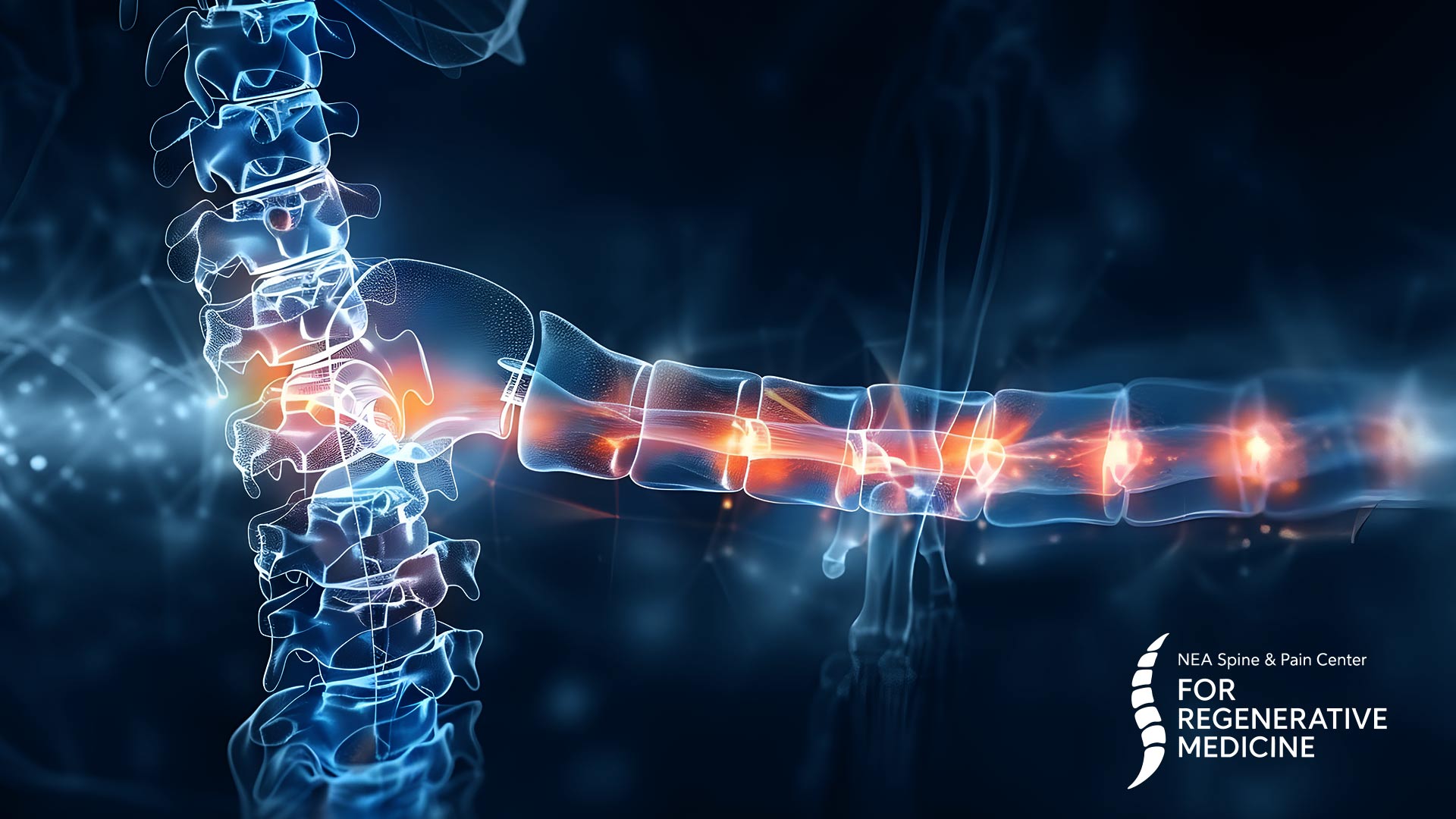
In contrast to pain which subsides upon healing, chronic pain persists for months or years. It is unyielding and frequently incapacitating. Indeed, this scenario is distressing; research indicates that chronic pain induces anxiety and depression in 50% of patients. This process creates a harmful circle, since these mental problems further intensify your pain.
Before your condition deteriorates, consult Dr. Abraham, who provides hope to individuals who are facing persistent pain that is unresponsive to conservative therapies.
Dr. Abraham, board-certified anesthesiologist and pain management specialist at New England Advanced Spine and Pain Center for regenerative medicine, specializes in advanced treatments including minimally invasive lumbar decompression (MILD), minimally invasive sacroiliac joint fusion, and regenerative medicine, which encompasses platelet-rich plasma injections.
In cases of persistent pain resulting from nerve injury, post-surgical pain following neck or back procedures, or other complicated nerve pain due to trauma, Dr. Abraham may suggest spinal cord stimulation or dorsal root ganglion stimulation.
Spinal cord stimulation:
When alternative interventional therapies have proven ineffective, and surgical options are unavailable or inadvisable, spinal cord stimulation directly targets the origin of your pain - the nerves.
A significant advantage of a spinal cord stimulator is the opportunity to undergo a one-week trial with temporary cables and an external battery prior to committing to permanent installation. The trial is successful if you achieve a minimum of 50% pain alleviation and regain your functionality.
Following a successful 7-day minimally invasive, temporary external trial treatment, Dr. Abraham implants a tiny device within your body that emits a controlled electrical current. It functions as a pacemaker for your spinal cord. A lead cable with electrodes transmits electrical stimulation from the generator, usually located at the lower back, to the nerves in the epidural space of the spinal cord.
Upon activation by a controllable external remote device, the electrical current modifies the pain signals transmitted to the brain.
Conditions addressed by spinal cord stimulation:
• Failed back surgery syndrome: persistent back or leg pain resulting from a previous back surgery or fusion.
• Failed neck surgery syndrome: persistent neck or arm pain resulting from a previous neck surgery or fusion.
• Chronic Sciatica.
• Spinal stenosis.
• Complex Regional Pain Syndrome (CRPS).
• Reflex Sympathetic Dystrophy (RSD).
• Postoperative neuropathic pain.
• Peripheral neuropathy.
Dorsal root ganglion stimulator:
Initially, the dorsal root ganglion stimulator closely resembles the spinal cord stimulator; both are implanted in similar areas, equipped with lead wires that transmit mild electrical currents to the nerves, alter the brain's perception of pain, and start with a 7-day trial phase.
The primary distinction between the spinal cord stimulator (SCS) and the dorsal root ganglion (DRG) stimulator is where the electrodes are placed and the goal of the lead wires. Spinal cord stimulation (SCS) targets the dorsal column or epidural space posterior to the spinal cord, influencing nerves in a broad area, which may alleviate extensive pain covering the neck and back, and also pain radiating to the arms or legs.
The DRG stimulator targets the dorsal root ganglion, a spinal structure comprised of a cluster of sensory nerves. In this process, Dr. Abraham identifies and targets a specific nerve with significantly greater precision than is possible with SCS, which is highly beneficial for localized nerve-related pain.
This highly targeted pain treatment by DRG also addresses the problem of nonspecific stimulation that induces paresthesia, thus minimizing residual sensations of tingling, burning, or pins and needles.
Due to its specificity, DRG stimulation effectively alleviates pain associated with complicated regional pain syndrome and post-amputation pain, sometimes referred to as phantom pain.
Selecting between SCS and DRG stimulators:
Thankfully, you don't have to make the choice between SCS and DRG stimulators by yourself. Dr. Abraham thoroughly assesses your case, carefully considers your chronic pain, and evaluates your symptoms, age, additional health issues, activity objectives, prior therapies, and lifestyle. After a comprehensive assessment, he will select the appropriate therapy for your specific area of pain to ensure the best results.
His extensive background and prominent position in the field of pain management make him an excellent choice to help you choose the most effective treatment for your chronic pain. For further information regarding these pain management procedures, schedule your appointment.